
Khalid Jamil accepts responsibility for the defeat and aims to move forward by learning from his mistakes
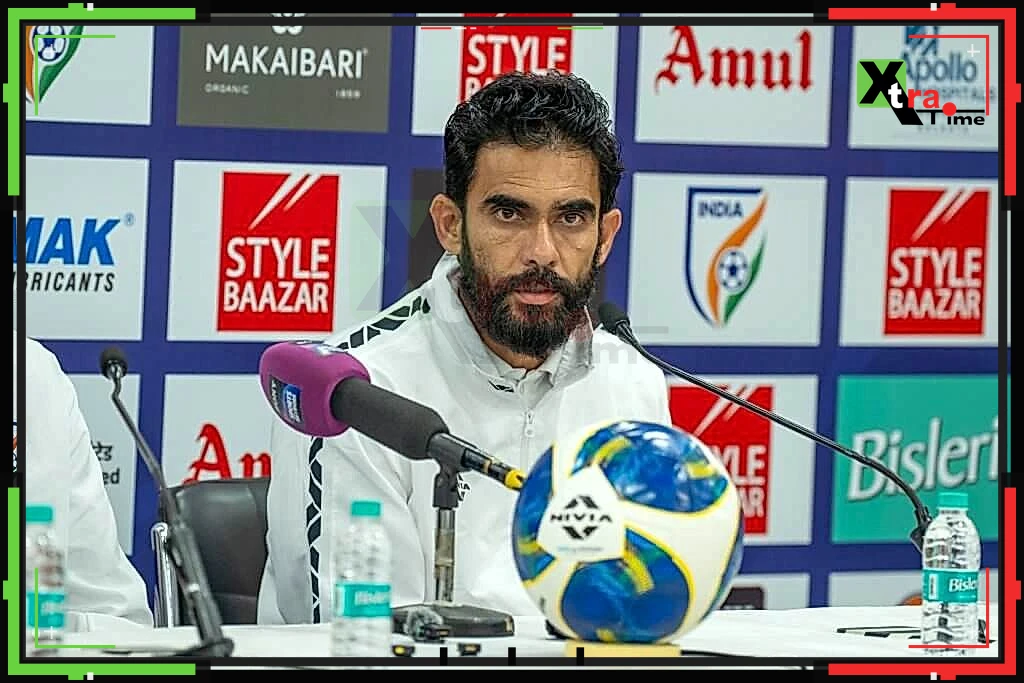
India head coach Khalid Jamil has taken full responsibility for the 6-1 defeat to Uruguay. “Conceding 10 goals in two matches is very bad. But, as I said, it is my mistake, and I do not want to blame anyone else,” he said.
XtraTime Web Desk
India head coach Khalid Jamil has taken full responsibility for the 6-1 defeat to Uruguay. “Conceding 10 goals in two matches is very bad. But, as I said, it is my mistake, and I do not want to blame anyone else,” he said.
India’s 4-0 defeat to Brazil had already highlighted how difficult it is to compete against opponents with greater quality and experience. Similar concerns emerged against Uruguay. Once the visitors began finding space and exploiting gaps in India’s defence, the Blue Tigers were unable to sustain their resistance.
Following two consecutive heavy defeats, several important questions have emerged for Jamil, particularly regarding India’s defensive organisation and their ability to remain competitive when opponents increase the pressure. There is no doubt that Brazil and Uruguay are considerably stronger sides, but the scale of the defeats cannot be ignored. India will have to find ways to prevent such collapses in future matches.
Jamil has also identified a pattern in India’s performances. According to the coach, the team’s problems became more pronounced as the matches progressed. He raised concerns over fitness and concentration, while acknowledging that the reasons behind the decline in performance during the latter stages of matches need to be examined.
“From all the matches you have seen, the first 30 minutes were okay. After that, maybe fitness was an issue, or concentration. There are many things. I could see more problems around the 60th or 70th minute. We have to think about that and address it next time,” Jamil said.
Jamil believes India’s players need to spend more time together as a national squad. According to him, additional camps could help the team prepare better for upcoming international assignments. At the same time, competition for places will continue, with players needing to prove themselves through their performances before the next set of fixtures.
“We need to have more camps. I think all the players are at a similar level, but we have to choose the best ones. There are matches coming up, and we will see who performs the best. This is the start of the season, and we are also playing against New Zealand,” Jamil said.
Jamil’s reference to the start of the season comes at a time when the Indian Super League (ISL) is scheduled to begin on October 10. With the domestic football season yet to get underway, India have already faced high-quality international opposition in Brazil and Uruguay. This has made the challenge of preparing the players even greater.
India’s next international assignment will be a two-match tour of New Zealand in November. The Blue Tigers will face New Zealand in Auckland on November 12 and Christchurch on November 15. Both matches fall within the FIFA international window. The tour will also mark India’s first-ever visit to New Zealand, whose team featured at the 2026 FIFA World Cup.
Jamil’s side will therefore face another World Cup-playing nation, this time away from home. More preparation time could help improve the team’s coordination and tactical understanding. However, India will also need to quickly address the defensive lapses and drop in performance that became evident in Kolkata.
Jamil will have to assess which players are best suited to the demands of the New Zealand fixtures. His call for more camps and better selection reflects the need to build greater consistency, particularly against opponents capable of punishing even the smallest mistakes.
Despite the heavy defeats, Jamil defended the decision to arrange matches against Brazil and Uruguay. His argument is that the value of such fixtures should not be judged solely by the results. India need to test themselves against stronger teams to understand how much they need to improve in order to compete at the international level.
“Whatever was decided was done collectively. We should not say that these were bad fixtures just because the results did not go in our favour. If the results had been good, we would have said these were necessary fixtures. But, yes, we need to play against big teams and good teams,” Jamil said.
One of the biggest benefits of playing against stronger opponents is that it exposes weaknesses that might otherwise remain hidden. However, the value of such experience will ultimately depend on how effectively India analyse these defeats and use the lessons to improve in future matches.
India’s international window began with a draw against Panama, before ending with consecutive defeats to Brazil and Uruguay. Jamil therefore has plenty to review ahead of the team’s next assignment. The results have once again highlighted the gap between India and the world’s top teams, while the coach himself has acknowledged the need for better preparation and more effective tactical planning.