
From Minefields to the Midfield Maestro: The Extraordinary Journey of Luka Modrić
That shepherd boy would one day become Luka Modrić—Croatia's greatest footballing icon, one of the finest midfielders the game has ever seen, and a symbol of resilience against impossible odds.
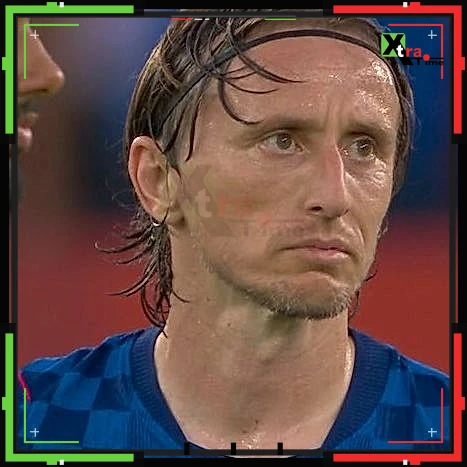
By Arkadyuti Roy (Guest Writer)
Scattered across the mountains lay hidden landmines. Every now and then, one would explode, claiming the life of a grazing cow or sheep. Yet, on the southern slopes, a little boy walked fearlessly with a rope in his hand, herding his flock. He was too young to understand the meaning of death, war, or fear.
This was the early 1990s.
The boy was barely four or five years old. His family lived in extreme poverty. Day after day, he wandered through the valleys and mountains of the Balkans, tending sheep in war-torn Yugoslavia. Survival was not a choice—it was the only way of life.
That shepherd boy would one day become Luka Modrić—Croatia's greatest footballing icon, one of the finest midfielders the game has ever seen, and a symbol of resilience against impossible odds.
Born in a Nation at War
The story of Luka Modrić is inseparable from the story of modern Croatia.
Following the collapse of the Austro-Hungarian Empire after World War I, Croatia became part of Yugoslavia. After World War II, it was incorporated into socialist Yugoslavia, where Croatian aspirations for independence remained suppressed for decades.
In 1991, Croatia finally declared independence.
But freedom came at a devastating cost.
Serbia-led Yugoslav forces, backed by local Serbian militias, launched a full-scale invasion. Croatia fought a brutal four-year war before finally reclaiming its territory in 1995 through the historic military offensive known as Operation Storm.
Thousands lost their lives. Entire towns disappeared. Millions of memories were buried beneath rubble.
A Childhood Shattered by War
Luka was born in the tiny village of Modrići, nestled beneath the Velebit Mountains in Croatia's Dalmatia region.
His parents worked in a local factory, struggling to support Luka, his two sisters, and his grandfather. Their life was already difficult, but war made it unbearable.
Then tragedy struck.
Luka's beloved grandfather was murdered by Serbian militias.
Soon afterward, their family home was burned to the ground. They fled with nothing—unable to save even a single household belonging.
Like thousands of Croatian families, the Modrićs became refugees.
Their new home was not a house.
It was the parking lot of a hotel.
Using torn blankets and the narrow space between parked cars, Luka's parents created a makeshift shelter for their young son. Every day was filled with uncertainty. Every night carried the fear that death might arrive before dawn.
Luka was named after his grandfather, whose memory would forever remain part of his journey.
Football Amid Ruins
Although the fighting gradually subsided, the Modrić family continued living in the refugee camp.
There was little food.
Little water.
No electricity.
The scars of grenades and landmines surrounded them everywhere.
Croatia needed years to recover after the war. Luka's father joined the Croatian Army as an aircraft mechanic while his mother struggled to hold the family together.
For many Croatians, football became more than a sport.
It became hope.
It became therapy.
It became a reason to dream again.
In the parking lot where refugees lived, young Luka spent countless hours with a football at his feet. Later, he played in the streets of Zadar, occasionally earning a little money from local matches.
Without realizing it, he had begun writing history.
Rejected Before He Was Recognized
Talent alone wasn't enough.
Luka was repeatedly rejected because of his frail physique.
Croatia's famous club Hajduk Split dismissed him, believing he was simply too small and too weak to succeed.
But rejection only strengthened his determination.
The manager of the hotel where the Modrić family had taken refuge had quietly noticed the little boy playing football every day in the parking lot. Connected with football circles in Zadar, he helped Luka find an opportunity.
Eventually, Dinamo Zagreb accepted him into their youth academy.
That decision changed everything.
Academy director Tomislav Bašić immediately recognized Luka's extraordinary potential. He treated him like family—arranging proper meals, medical care, nutritional support, and professional coaching.
He even crafted wooden shin guards for the young midfielder when resources were scarce.
Bašić believed Luka would one day conquer world football.
Luka believed it too.
His idol was Italian legend Francesco Totti, and he dreamed of playing with the same elegance and intelligence.
The Beginning of Greatness
In 2003, at just seventeen, Luka joined Bosnian club Zrinjski Mostar on loan to gain first-team experience.
Competing against older, physically stronger players, he stunned everyone.
By the end of the season, he had been named the league's Best Player.
The skinny refugee boy had announced himself.
World football was about to discover him.
More Than a Footballer
Nearly 300,000 Croatians were displaced during the War of Independence.
Luka Modrić became their story.
Between exploding grenades and endless football dreams, he grew into a player who represented something far greater than trophies.
He showed an entire nation that hope can survive destruction.
That beauty can emerge from devastation.
That football can become a language of healing.
A Legacy Beyond Trophies
When Luka Modrić's World Cup journey finally came to an end, it marked the close of one of football's greatest international careers.
He leaves behind memories that transcend statistics.
FIFA World Cup Runner-up (2018)
FIFA World Cup Third Place (2022)
Ballon d'Or Winner (2018)
Legendary spells with Tottenham Hotspur and Real Madrid
Nearly two decades representing Croatia on the international stage (2006–2026)
His career was never simply about passes, goals, or trophies.
It was about proving that a child who once walked through minefields could one day stand at the summit of world football.
The road he travelled was once littered with landmines.
Today, it is remembered as a path lined with roses.
And among those roses, one name will forever bloom—
Luka Modrić.