
From Kings of Africa to Champions Again: The Fall and Rise of Ivory Coast After the Golden Generation
As legends retired one after another, Ivory Coast struggled to replace their influence. The team failed to qualify for the 2018 FIFA World Cup, ending a run of three consecutive appearances.
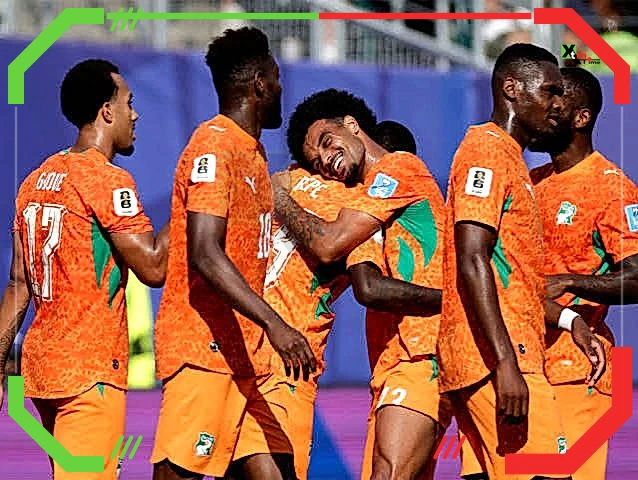
XtraTime Newsdesk: For nearly a decade, Ivory Coast boasted one of the most talented squads in world football. Led by icons such as Didier Drogba, Yaya Touré, Kolo Touré, Salomon Kalou, Gervinho and Didier Zokora, the Elephants were the pride of African football. They qualified for three consecutive FIFA World Cups between 2006 and 2014 and dominated the continent with a generation many believe was Africa's greatest collection of talent.
Yet despite all that quality, silverware proved frustratingly elusive.
The Golden Generation reached two Africa Cup of Nations finals—in 2006 and 2012—but heartbreak struck both times in dramatic penalty shootouts against Egypt and Zambia respectively. At the World Cup, they were repeatedly handed "Groups of Death," facing the likes of Argentina, the Netherlands, Portugal and Brazil. Although they produced memorable performances, they never progressed beyond the group stage.
Their lone major triumph finally came in 2015, when they defeated Ghana on penalties to lift the Africa Cup of Nations for the first time since 1992. Ironically, by then, several of the team's biggest stars were approaching the end of their international careers.
The Difficult Years
The years following the Golden Generation were far from smooth.
As legends retired one after another, Ivory Coast struggled to replace their influence. The team failed to qualify for the 2018 FIFA World Cup, ending a run of three consecutive appearances. While talented youngsters emerged, they lacked the experience and cohesion that had defined their predecessors.
Results became inconsistent. Coaching changes disrupted continuity, and the Elephants were no longer viewed as Africa's dominant force. Nations like Senegal, Morocco, Algeria and Egypt overtook them in continental prominence.
Although they reached the quarter-finals of the 2019 AFCON, there was little indication that another golden era was on the horizon.
Disaster on Home Soil
Everything appeared to unravel at the 2023 Africa Cup of Nations, hosted in Ivory Coast.
The hosts endured a nightmare group stage. They suffered a humiliating 4-0 defeat to Equatorial Guinea—the heaviest home loss in the nation's history. Head coach Jean-Louis Gasset was dismissed before the knockout rounds, and qualification to the Round of 16 depended entirely on results elsewhere.
At one point, the Ivorians believed they had already been eliminated.
Instead, a remarkable sequence of results allowed them to squeeze through as one of the tournament's best third-placed teams.
It was a lifeline that would change everything.
The Greatest Comeback in AFCON History
Former midfielder Emerse Faé, who had been serving as assistant coach, was placed in temporary charge.
What followed became one of football's greatest redemption stories.
In the Round of 16, Ivory Coast stunned defending champions Senegal in a penalty shootout after coming from behind.
The quarter-final against Mali produced even greater drama. Reduced to ten men early in the game, the Elephants equalized in stoppage time before scoring a stunning winner in the 122nd minute to complete one of the most incredible comebacks in tournament history.
They then defeated DR Congo in the semi-finals before overcoming Nigeria 2-1 in the final.
From the brink of elimination to continental champions in less than three weeks, Ivory Coast had produced arguably the greatest comeback campaign in Africa Cup of Nations history.
A New Generation Emerges
The AFCON triumph marked the beginning of a new era rather than the end of one.
A fresh core of players began to establish themselves. Simon Adingra announced himself on the biggest stage with his electric pace and creativity. Sébastien Haller, who had earlier battled testicular cancer before returning to football, scored the winning goal in the final to complete one of the sport's most inspiring personal stories.
Franck Kessié provided leadership in midfield, while Evan Ndicka anchored the defence. Young talents such as Oumar Diakité, Karim Konaté and Amad Diallo gave supporters hope that another exciting generation was taking shape.
Unlike the star-studded squads of the past, this team relied less on individual brilliance and more on collective resilience.
Carrying the Momentum to the World Stage
That renewed confidence carried into qualification for the 2026 FIFA World Cup.
The Elephants entered the tournament not as overwhelming favorites, but as a balanced, disciplined side capable of competing with anyone. Their AFCON victory restored belief throughout the country and re-established Ivory Coast among Africa's football elite.
The contrast with the years immediately after the Golden Generation could not have been greater.
Where there had once been uncertainty, there was now stability.
Where there had been disappointment, there was now belief.
More Than Just a Revival
Ivory Coast's story is not simply about replacing one generation with another.
It is about proving that success is never guaranteed, no matter how talented a squad may be. The Golden Generation dazzled the world but often fell agonizingly short of major honors. The next generation endured years of struggle before achieving what many thought impossible.
Their 2023 AFCON triumph showed that football rewards resilience as much as talent.
From the brilliance of Drogba and Yaya Touré to the determination of Haller, Adingra and their teammates, Ivory Coast's football journey has come full circle. After years in the wilderness, the Elephants are once again marching among Africa's elite—this time built not only on gifted individuals, but on belief, unity and an unbreakable spirit.


